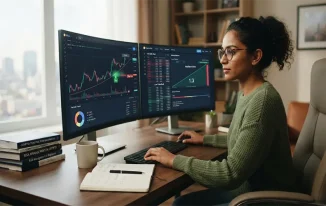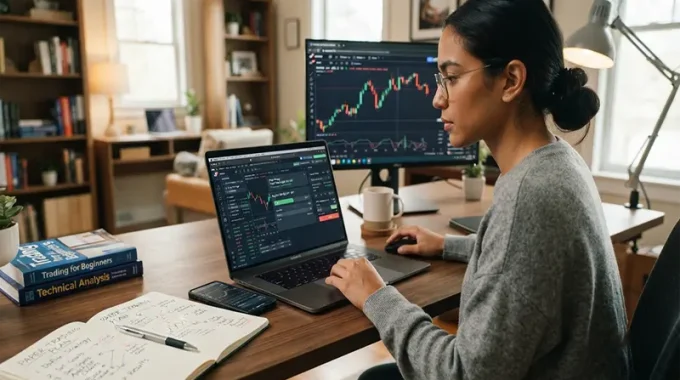
For many aspiring traders, the dream of financial independence starts with a bright screen, a chart, and a desire to make the market work for them. However, the market is a ruthless teacher for the unprepared. Entering the world of live trading without experience is akin to learning to swim by jumping into the deep end of the ocean during a storm. This is where paper trading becomes your most essential tool.
Paper trading, or simulated trading, is the practice of trading financial instruments—stocks, options, forex, or cryptocurrencies—using virtual money in a real-time, simulated market environment. It is the ultimate training ground, allowing you to learn the mechanics, test your strategies, and make costly mistakes without risking a single cent of your hard-earned capital.
Step 1: Understand the Psychology and Purpose
Many beginners mistakenly believe that paper trading is merely a way to learn “how to click the buttons” on a brokerage platform. While technical proficiency is important, the true purpose of paper trading is far deeper: it is about testing your strategy and, more importantly, mastering your psychology.
The greatest hurdle in trading is not the market; it is the human brain. When trading with real money, fear and greed trigger irrational decisions. In a paper trading environment, the lack of real financial risk can create a “carefree” mindset, leading to reckless trades you would never make with your own savings. To get the most out of your simulation, you must treat your virtual capital as if it were real. If you lose $500 in the simulator, treat it with the same emotional weight as if you had lost it in your bank account. This discipline is the foundation of long-term success.
Step 2: Choose the Right Paper Trading Platform
Not all simulators are created equal. As a beginner, you need a platform that mirrors the experience of a professional brokerage as closely as possible.
When selecting a platform, look for the following features:
- Real-time Data: Delayed data is useless for testing day-trading strategies where seconds matter. Ensure your simulator offers live market data.
- User-Friendly Interface: The platform should be intuitive. If you struggle to find the “buy” or “sell” buttons, you will be too slow during actual market volatility.
- Multiple Asset Classes: If you are interested in options or crypto, ensure the simulator supports these, not just standard equities.
Reputable platforms such as Thinkorswim (by Charles Schwab), Interactive Brokers (IBKR), and TradingView offer robust paper trading accounts. These are professional-grade tools that allow you to transition from the simulator to a live account seamlessly.
Step 3: Define Your Trading Strategy and Rules
Trading without a strategy is gambling. Before you place your first trade in the simulator, you must have a plan. You should not be trading based on “gut feelings” or the latest social media buzz.
Your trading plan should include:
- Trading Style: Are you a day trader who closes positions before the market ends, or a swing trader who holds positions for days or weeks?
- Entry/Exit Rules: Under what specific technical conditions will you buy? More importantly, under what conditions will you sell?
- Risk Management: This is non-negotiable. You must define your stop-loss level before you enter any trade. Never risk more than 1–2% of your total account on a single position.
Having these rules written down allows you to treat your trading as a professional business rather than a hobby.
Step 4: Execute Trades and Track Your Performance
Once your strategy is defined, start executing. In your simulator, you will encounter different order types. Learn them well:
- Market Orders: Buying or selling immediately at the current price.
- Limit Orders: Setting a specific price at which you are willing to buy or sell.
- Stop-Loss Orders: Automatically selling a security when it hits a certain price to prevent further losses.
The most critical part of this step is the trading journal. For every trade you make, log the date, the asset, the reason for the trade, the outcome, and—most importantly—what you learned. If you made a mistake, analyze why it happened. Was it a technical error, or was it an emotional lapse? A journal transforms your paper trading from “play” into rigorous data analysis.
Step 5: Transitioning from Paper to Live Trading
How do you know when you are ready to trade with real money? You are ready when you have proven, through your journal and your consistent returns, that your strategy works.
Do not move to a live account simply because you feel bored. Set a benchmark, such as achieving consistent profitability over three consecutive months in the simulator. Even then, do not deposit your entire savings. Start small, increase your position sizes gradually, and continue to manage your risk with the same discipline you practiced in the simulator.
Paper trading is the bridge between being a complete novice and becoming a confident, disciplined trader. By treating the simulator with the seriousness of a real-world environment, you can build the skills and mental fortitude necessary for long-term success. Take the first step today: open a demo account, define your rules, and start learning the market on your own terms.