The search for low fees is a rite of passage for every cryptocurrency trader. When transaction costs, deposit charges, and hidden margins eat away at your capital, profitability shrinks fast. Platforms aggressively market “zero-fee” trading or rock-bottom commissions to lure users in, but in the digital asset ecosystem, shortcuts often come with hidden security trade-offs.
Balancing low trading costs with institutional-grade security is the ultimate test when picking a platform. This guide provides a safety-first framework for selecting a cost-effective crypto exchange without risking your portfolio.
Part 1: Deconstructing Crypto Exchange Fees
Before evaluating how safe a platform is, you must understand how exchanges actually make money. A low headline fee can easily be offset by unexpected costs elsewhere.
- Maker vs. Taker Fees: Exchanges charge different rates depending on how orders interact with the order book. Makers add liquidity by placing limit orders that sit on the book, while Takers remove liquidity by executing immediate market orders. Maker fees are almost always lower.
- The Hidden Trap of Deposit and Withdrawal Fees: An exchange might boast 0% trading fees, only to charge an exorbitant flat rate when you try to withdraw your crypto to a personal wallet. Always check network withdrawal fees before opening an account.
- Spread Markup: “Fee-free” consumer apps often make their money by widening the spread—the difference between the buying and selling price. If an app hides its trading fee inside an inflated purchase price, you are still paying a fee.
Part 2: The Non-Negotiable Pillars of Exchange Security
Saving a fraction of a percent on a trade is meaningless if the platform suffers a security breach or insolvency event. Prioritize these security pillars above all else:
- Proof of Reserves (PoR) and Audits: Reputable low-fee exchanges publish cryptographic Proof of Reserves, verifying via independent third-party audits that they hold a 1:1 backing of all user funds and do not secretly lend out customer assets.
- Regulatory Compliance and Licensing: Platforms adhering to strict Know Your Customer (KYC) and Anti-Money Laundering (AML) regulations offer legal recourse and operational transparency, reducing the likelihood of sudden shutdowns.
- Cold Storage and Insurance Funds: Look for exchanges that store the vast majority of user funds in offline cold storage (air-gapped from the internet) and maintain commercial crime insurance to cover potential digital asset breaches.
Part 3: Evaluating Liquidity, Order Types, and Ease of Use
Low fees are only valuable if your trades execute efficiently and cleanly.
- Why Liquidity Matters: High-liquidity exchanges ensure that large orders execute smoothly without slippage—the hidden cost incurred when a trade executes at a worse-than-expected price due to thin order books.
- Advanced Order Types: To secure low maker fees, you need access to limit orders rather than simple “Instant Buy” buttons. Learning to use an advanced trading interface allows you to dictate your exact entry price and minimize costs.
- Interface vs. Cost Trade-off: Beginner-friendly interfaces are often more expensive because they bundle execution costs into simplified screens. Lower-cost platforms generally require navigating a more data-rich order book interface.
Part 4: A Step-by-Step Evaluation Checklist
Before depositing a single dollar onto a new exchange, run it through this evaluation process:
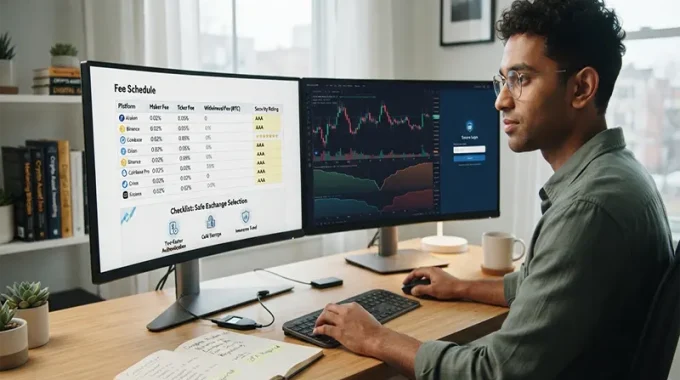
- Check the Fee Schedule: Look past the marketing copy and locate the official maker/taker fee tier and withdrawal fee table.
- Verify Regulatory Standing: Confirm whether the platform is registered or licensed to operate in your specific geographic jurisdiction.
- Audit the Security Features: Ensure mandatory Two-Factor Authentication (2FA), anti-phishing codes, and address whitelisting are available.
- Confirm Proof of Reserves: Verify if the exchange publishes regular, verifiable third-party asset audits.
- Test with a Small Amount: Deposit a minimal test amount and perform a small withdrawal to experience the platform’s speed, cost, and reliability firsthand.
Safe Exchange Selection Checklist
- Transparent Fee Schedule: Clearly published maker, taker, and network withdrawal fees with no hidden spreads.
- Proof of Reserves: Regularly audited cryptographic proof ensuring 1:1 asset backing.
- Cold Storage Dominance: The vast majority of user funds held securely offline.
- High Liquidity: Deep order books that prevent costly price slippage during execution.
- Regulatory Alignment: Compliance with local KYC/AML laws to protect against sudden jurisdictional lockouts.
In the world of digital asset trading, never sacrifice security for a fraction of a percent in fee savings. The cheapest exchange is worthless if it compromises your safety or locks your funds during market stress. By carefully analyzing fee structures, demanding robust security frameworks like Proof of Reserves, and utilizing advanced limit orders, you can trade cost-effectively and protect your capital for the long term.