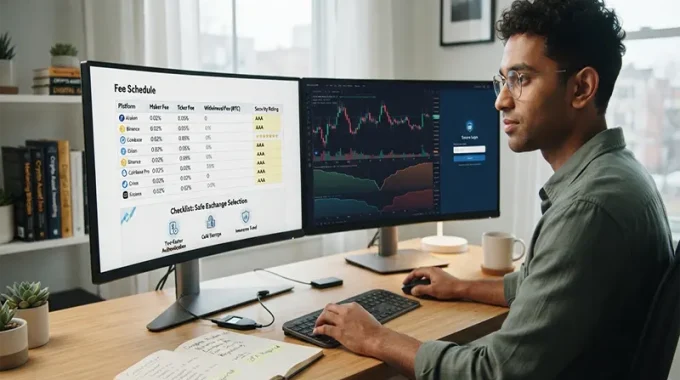
How to Choose a Low-Fee Crypto Trading Platform Safely

The search for low fees is a rite of passage for every cryptocurrency trader. When transaction costs, deposit charges, and hidden margins eat away at your capital, profitability shrinks fast. Platforms aggressively market “zero-fee” trading or rock-bottom commissions to lure users in, but in the digital asset ecosystem, shortcuts often come with hidden security trade-offs.

Balancing low trading costs with institutional-grade security is the ultimate test when picking a platform. This guide provides a safety-first framework for selecting a cost-effective crypto exchange without risking your portfolio.

Part 1: Deconstructing Crypto Exchange Fees

Before evaluating how safe a platform is, you must understand how exchanges actually make money. A low headline fee can easily be offset by unexpected costs elsewhere.

  • Maker vs. Taker Fees: Exchanges charge different rates depending on how orders interact with the order book. Makers add liquidity by placing limit orders that sit on the book, while Takers
…

How Central Bank Interest Rate Decisions Affect Stock Market Volatility

Central banks are the ultimate puppet masters of global liquidity. When institutions like the U.S. Federal Reserve, the European Central Bank, or Bank Indonesia make a move on interest rates, global financial markets listen. For equity investors, a central bank rate decision can transform a calm, steady trading session into a whirlwind of volatility within seconds.

Understanding the macroeconomic mechanics behind why stock charts spike or crash during rate announcements is essential for navigating modern financial markets. This guide breaks down the direct link between monetary policy and stock market volatility.

Part 1: The Cost of Capital and Valuations

To understand why rate decisions trigger volatility, you must first view interest rates as the baseline “price of money” across the global economy.

  • Corporate Borrowing and Margins: When central banks raise interest rates, the cost of borrowing capital for businesses increases. Companies with heavy debt loads face higher debt-servicing expenses, which
…

How to Start Stock Trading with Little Money Using Fractional Shares

For generations, a stubborn myth has kept everyday people on the sidelines of the financial markets: the belief that you need thousands of dollars just to get started. When premier companies trade at hundreds or even thousands of dollars per single share, it is easy to see why beginners feel priced out.

However, a modern financial innovation has completely leveled the playing field: fractional shares. You no longer need to buy an entire pie to enjoy a slice. This guide will show you how to start building a diversified, powerful stock portfolio with as little as $5 or $10.

Part 1: What Are Fractional Shares and How Do They Work?

To understand fractional shares, think of a corporate share like a pizza. Traditionally, a brokerage would only sell you an entire pizza (a whole share). If a high-performing technology company’s stock costs $500 per share, you needed $500 cash …

Stocks vs. Forex vs. Crypto: Which Market Is Best for Beginner Traders?

Every new trader eventually faces a critical crossroads: deciding where to deploy their very first dollar. With countless financial instruments and markets available at the touch of a smartphone screen, choosing the right starting point can feel overwhelming.

The trading world is dominated by three heavyweight contenders: Stocks, Forex, and Cryptocurrency. Each market operates under entirely different rules, structures, and risk profiles. Understanding these differences is essential for evaluating risk, accessibility, volatility, and learning curves to find your best fit.

Part 1: The Stock Market (The Steady Foundation)

The stock market involves buying and selling shares of publicly traded companies, representing fractional ownership in real businesses. Standard trading occurs during traditional market hours (typically Monday through Friday).

  • Pros:
  • Abundant Historical Data: Stocks have centuries of data, making technical and fundamental analysis robust and reliable.
  • Long-Term Growth Trends: Historically, broad stock markets trend upward over long horizons, rewarding
…

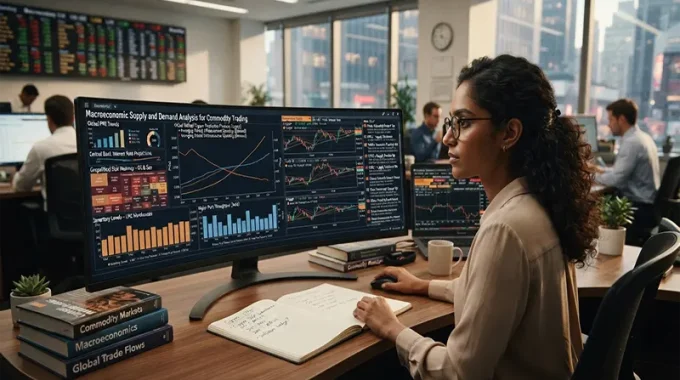
Macroeconomic Supply and Demand Analysis for Commodity Trading

Commodities are the fundamental building blocks of the global economy. From the crude energy powering our transport networks to the copper wiring modern electronics and the agricultural products feeding populations, raw materials dictate the rhythm of global commerce. Unlike corporate stocks, which derive value from management teams and business models, commodities are physical assets governed by the elemental forces of physical availability and utility.

To trade commodities successfully, professionals must move past short-term technical charts and examine the macro picture: global trade flows, industrial output, and structural resource scarcity. This guide explores how to bridge the gap between macroeconomic data and commodity price action.

Part 1: The Demand Drivers

Commodity demand is directly tied to the pulse of global economic activity. When economies expand, consumption surges; when they stall, demand evaporates.

  • Global GDP Growth: Gross Domestic Product serves as the primary baseline for aggregate demand. Broad-based economic growth lifts the
…